
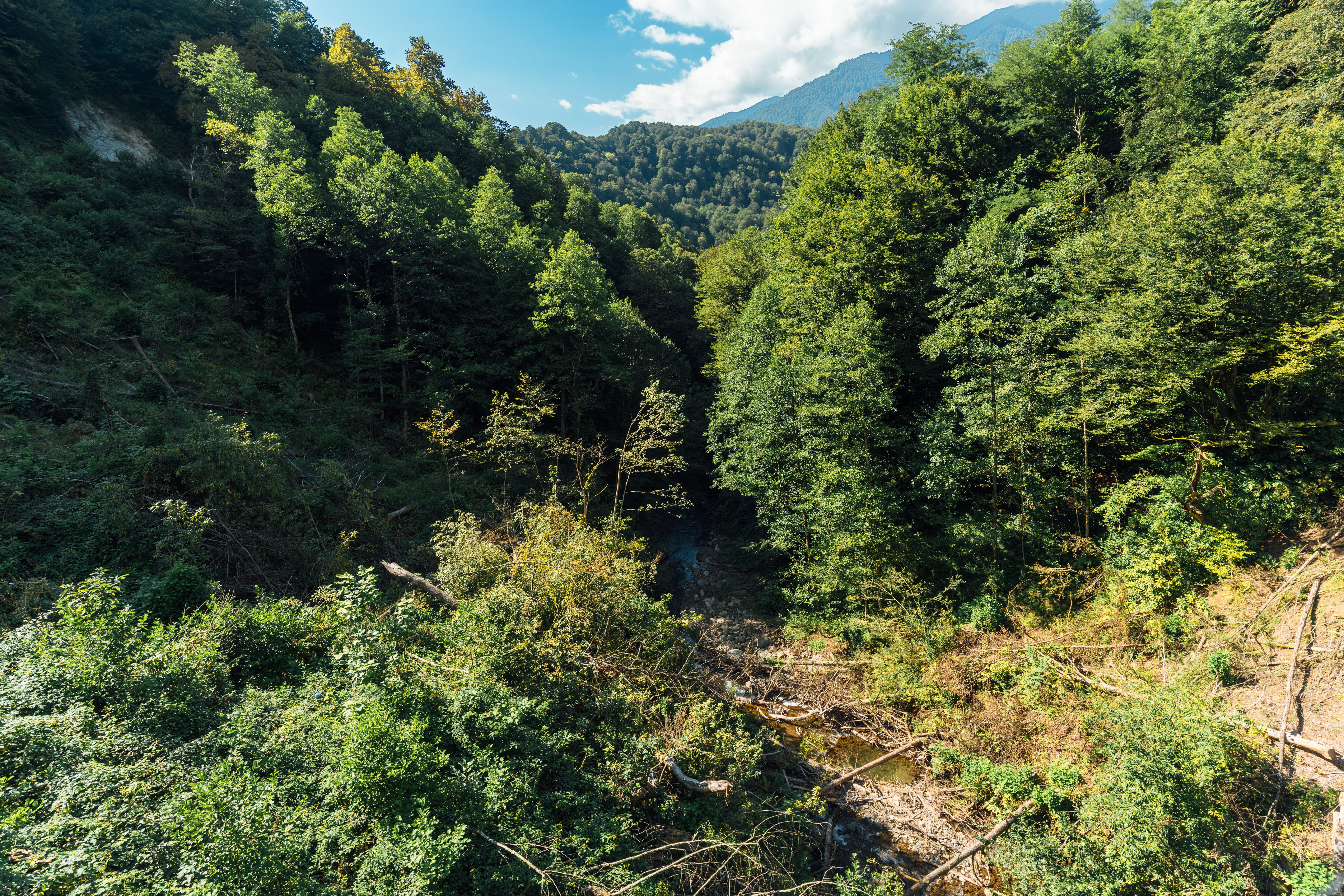
Replanting a felled forest restores tree cover, and tree cover is not the same thing as the forest that was removed. The difference lies in structures that accumulate over centuries and cannot be installed.
Structure is the defining feature
An old forest contains trees of many ages and sizes, gaps where individuals have fallen, standing dead trunks and a canopy of uneven height.
That variation creates a wide range of light, humidity and temperature conditions within a small area, and different species occupy different parts of that range.
A plantation established in one operation has trees of a single age and even spacing, which produces a uniform interior and far fewer distinct conditions.
Cavities take a very long time to form
Hollows suitable for nesting and roosting form where a limb breaks and fungal decay slowly excavates the heartwood, a process that begins only in mature trees.
Owls, hornbills, parrots, bats and many mammals depend on cavities they cannot make themselves, so their presence tracks the availability of old trees rather than forest area.
Artificial boxes substitute partially for some species, though they differ in thermal properties and are used at different rates, and they require ongoing replacement.
Deadwood is habitat rather than waste
Fallen trunks and standing dead stems support a large community of fungi, beetles, and the species that feed on them, and much of that community is specialised.
Decay proceeds through stages, each hosting different organisms, so a forest needs deadwood of several ages simultaneously rather than a single input.
Managed forests remove dead material routinely, which is the single clearest difference in species composition between working woodland and old-growth stands.
The soil takes longest
Old forest soils hold deep accumulated organic matter and extensive fungal networks that connect tree roots and transfer nutrients between them.
Clearance disrupts those networks, and heavy machinery compacts soil in ways that persist for decades and alter drainage and root growth.
Rebuilding soil structure and its fungal community is the slowest part of recovery, and it proceeds only under continuous forest cover.
What this means for restoration
Restoration is worthwhile and produces valuable habitat, but the timescale is honest only when stated in centuries for the features described above.
Protecting remaining old stands is therefore not interchangeable with planting elsewhere, since the two produce different habitat on entirely different schedules.
Where restoration is the only option, retaining old individual trees, leaving deadwood in place and allowing natural gaps to form shortens the gap considerably.