
Range shifts are among the most consistently documented biological responses to changing climate, and the pattern is clear enough that the interesting questions are now about consequences.
The observed pattern
Species distributions are moving toward the poles and to higher elevations.
Which has been documented across many taxa and regions, with meta-analyses finding consistent direction and considerable variation in rate.
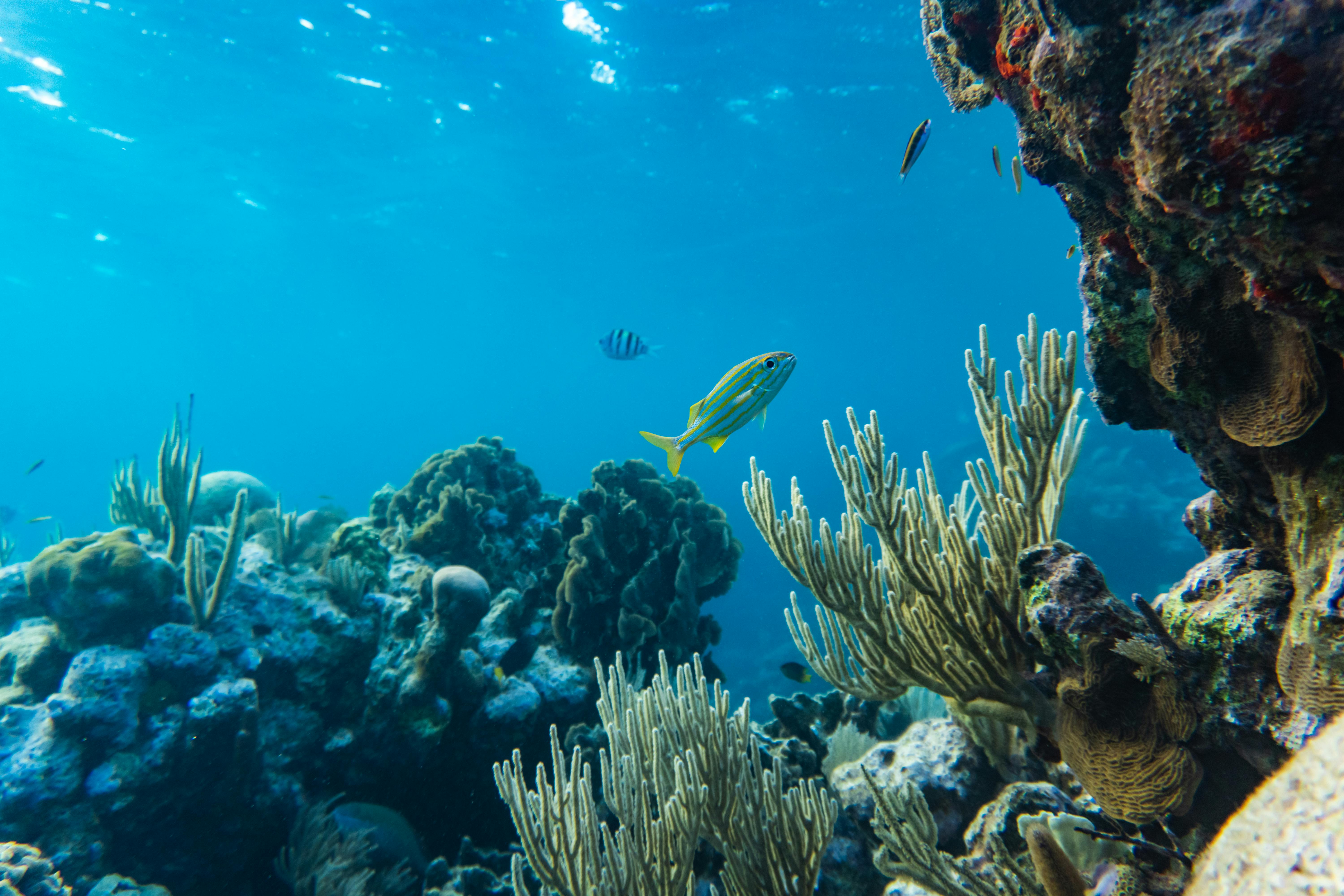
Marine species are moving faster on average than terrestrial ones, which is attributed partly to fewer barriers and partly to the different rate of temperature change through water.
Phenology
Timing shifts alongside distribution.
Spring events — leaf emergence, flowering, breeding, migration arrival — are occurring earlier across many species.
Long-term records from naturalists, some spanning centuries, have been invaluable for establishing this.
Mismatch
The consequence that matters most.
Species that depend on each other are shifting at different rates.
Which means a bird timing its breeding to coincide with peak caterpillar abundance can find that peak occurring earlier than its own adjustment.
Documented cases of this exist, with measurable effects on breeding success.
The general problem is that ecological communities are not moving as units — they are disaggregating and recombining.
Barriers
Movement requires somewhere to move to and a route.
Mountain species moving upslope eventually run out of mountain, which is why high-elevation specialists are among the most threatened.
Species at the poleward edge of a continent have no further land.
And habitat fragmentation blocks movement even where suitable conditions exist elsewhere.
Which is why connectivity has become a central climate adaptation concern rather than only a fragmentation one.
Rate
The question is whether species can move as fast as conditions change.
Mobile species with good dispersal can. Sessile organisms, species with specific habitat requirements, and those with long generation times generally cannot.
Plants in particular disperse slowly, and forests cannot relocate at the rate temperature zones are moving.
Adaptation in place
The alternative to moving.
Evolutionary adaptation requires genetic variation and enough generations, which favours species with short generation times and large populations.
Phenotypic plasticity — individuals adjusting without genetic change — provides a faster response and has limits.
Both are being documented, and neither appears sufficient for the rate of change in most cases.
Assisted migration
Deliberately moving species to areas that will become suitable.
Which is controversial, since it means deliberately introducing species outside their range, with all the risks that implies.
Proponents argue that the alternative for some species is extinction.
Opponents point to the record of introductions causing harm and to the difficulty of predicting outcomes.
It has been carried out for a small number of species, generally with careful assessment.
What conservation is doing about it
Prioritising connectivity so that movement is possible.
Identifying climate refugia — areas likely to remain suitable — and protecting them.
Managing for resilience rather than for a fixed target state.
And accepting that protected area networks designed around current distributions will need to change, which is administratively and legally difficult.
Winners and losers
Range shifts produce both.
Generalist species with broad tolerances and good dispersal are expanding.
Specialists with narrow requirements and poor dispersal are contracting.
Which produces biotic homogenisation — communities becoming more similar to each other as specialists are replaced by the same widespread generalists.
Novel communities
Species combinations with no historical precedent, formed as ranges shift independently.
Which means the interactions are untested, and predicting outcomes from historical data is unreliable.
Conservation frameworks built around restoring historical communities do not readily accommodate this.
Extreme events
Increasingly recognised as more consequential than gradual change for many species.
Heatwaves, droughts, fires and storms cause direct mortality events that gradual averages do not capture.
Mass mortality events attributed to specific extreme conditions have been documented across marine and terrestrial systems.
Ocean effects
Warming, acidification and deoxygenation are occurring together, and their combined effects are less studied than any individually.
Monitoring and evidence
Detecting range shifts requires historical distribution data of adequate quality.
Which exists for well-recorded groups in well-recorded regions and not elsewhere, producing a substantial geographic bias in what is known.
Museum specimens with locality data have proven valuable for establishing historical distributions, which is an argument for collections that are frequently underfunded.
Phenology records
Some of the longest biological datasets come from records kept for other purposes — agricultural, religious and personal.
Which have allowed detection of changes over centuries, and they are irreplaceable.
Contemporary volunteer phenology schemes continue this and depend on sustained participation.
Protected area design
Networks designed around current distributions may not protect the same species in future.
Which argues for larger areas spanning climatic gradients, and for legal frameworks flexible enough to adjust boundaries.
Most existing designations are fixed, which is a structural mismatch with the problem.
Which is being addressed through dynamic designation and through protecting land outside formal networks, both of which are slower than the change.