
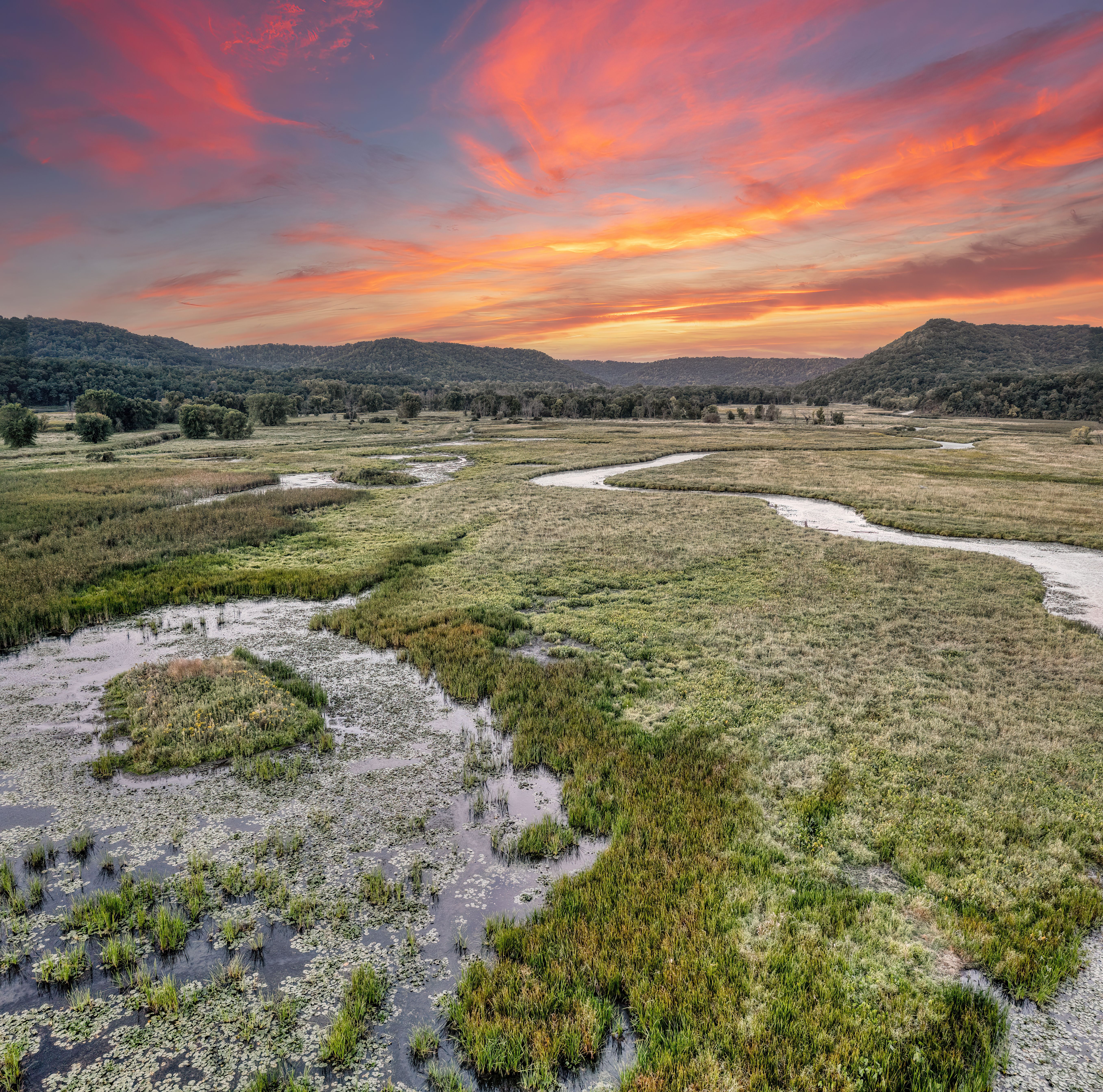
A river in drought is not simply a smaller version of itself. Reduced flow alters temperature, chemistry and connectivity together, and the biological effects come from the combination.
Flow is the habitat
Current shapes everything in a river. It sorts gravel from silt, delivers oxygen, carries food to filter feeders and flushes waste away from spawning beds.
When flow drops, fine sediment settles into the gravel spaces that insect larvae and fish eggs occupy. The riverbed effectively seals over.
Riffles are lost first because they are shallow, and riffles are where much of a river's invertebrate production happens. The base of the food web narrows before anything visible changes.
Temperature and oxygen move together
Shallower water heats faster under the same sunlight, and warmer water holds less dissolved oxygen at exactly the moment fish need more of it.
Metabolic demand rises with temperature, so a trout in warm water burns energy faster while extracting less oxygen per breath. The squeeze operates from both directions.
Decomposition of stranded organic material consumes further oxygen. Overnight lows, when plants respire rather than photosynthesise, are usually when fish kills occur.
Fragmentation into isolated pools
As riffles dry, a continuous channel becomes a chain of pools separated by damp gravel. Movement between them stops.
Fish concentrate at high density in the remaining water, where competition intensifies, disease spreads readily and predators including herons and otters find easy hunting.
Species that must migrate to spawn are cut off from upstream habitat entirely. A single dry season can remove a year class from a population.
Sediment and channel change
Drought suppresses the moderate floods that periodically rearrange a channel, scouring pools and depositing fresh gravel bars.
Without them the channel simplifies. Vegetation encroaches from the banks, side channels fill, and the variety of depths and speeds that supported different species is reduced.
The first large flow after a drought then moves an unusual amount of accumulated material at once, which can scour spawning beds that had just been recolonised.
Why recovery lags the rain
Flow returns quickly once rain resumes, but the populations do not. Long-lived fish may have lost several breeding seasons, and recolonisation depends on refuges having survived nearby.
Invertebrates recover faster, though the assemblage that returns is often dominated by fast-colonising generalists rather than the specialists lost.
Repeated droughts with short gaps therefore shift river communities toward tolerant, mobile species, a change that persists through wet years as well as dry ones.