
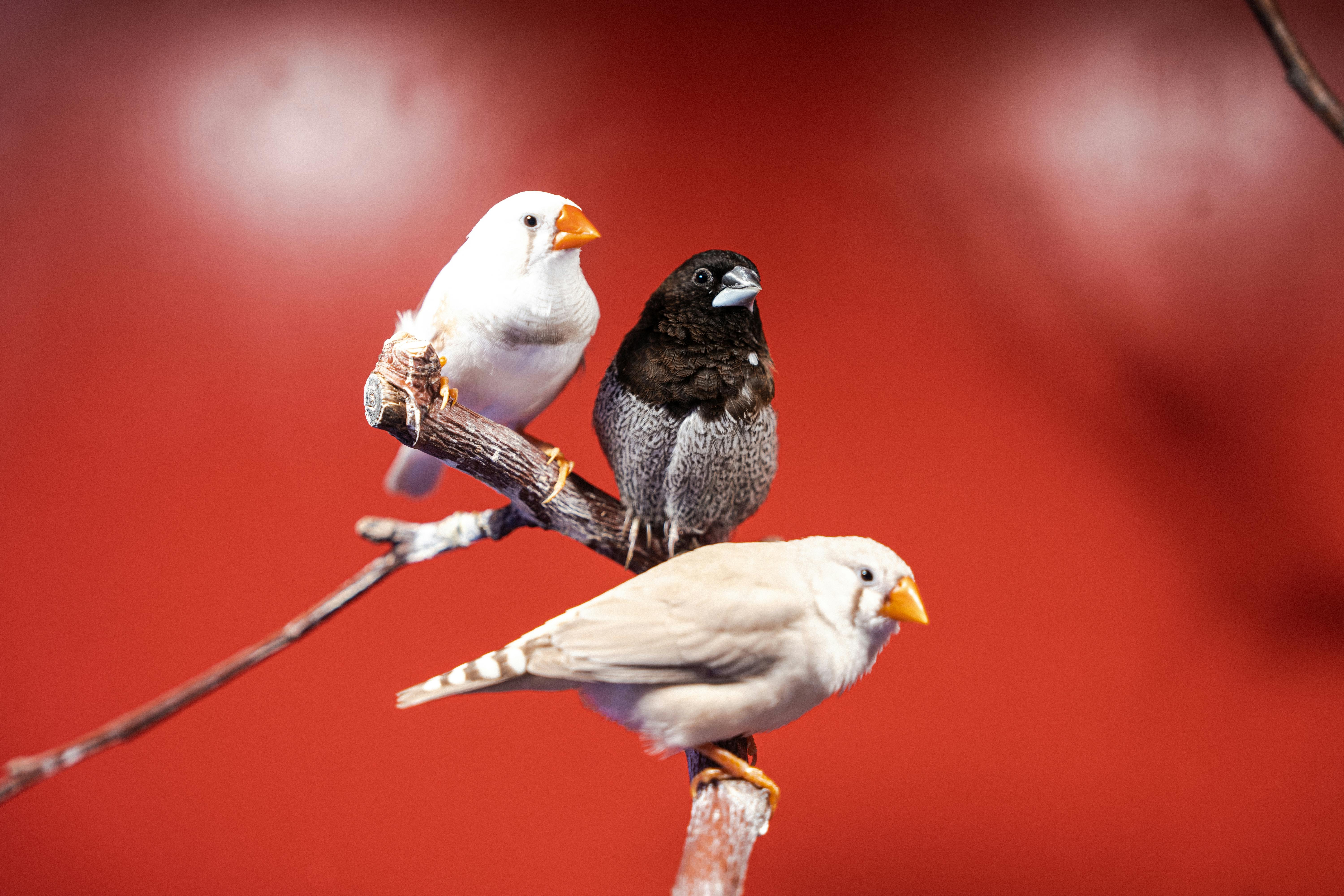
Breeding endangered species in captivity has produced some of conservation's clearest successes and a considerably larger number of programmes that never achieved reintroduction.
The genetic problem
A population founded from few individuals loses genetic variation over generations.
Which reduces adaptive potential and increases the expression of harmful recessive traits.
Inbreeding depression — reduced survival and fertility in inbred individuals — has been documented across many species and is the practical consequence.
Studbooks
Records of every individual in a managed population, its ancestry, and its location.
Which allows breeding to be planned to minimise relatedness and to equalise founder representation.
Software calculates mean kinship for each individual, and the least related individuals are prioritised for breeding.
This requires cooperation between institutions, since no single collection holds enough animals, and international coordination is standard for major programmes.
Founder representation
The genetic variation preserved depends on how evenly the original founders are represented in current animals.
Which means an individual descended from an underrepresented founder is genetically valuable regardless of how many animals exist.
Programmes therefore sometimes prioritise breeding from animals that are not obviously exceptional, which is counter-intuitive from outside.
Adaptation to captivity
A serious problem receiving increasing attention.
Selection in captivity favours traits suited to captivity — tolerance of confinement, of human presence, of unnatural diet.
Which reduces fitness in the wild, measurably, and the effect can appear within a few generations.
Minimising generations in captivity, maintaining natural conditions where possible, and periodic introduction of wild genes all address it partially.
Behaviour
Animals reared in captivity may lack skills learned in the wild.
Predator recognition, foraging, social behaviour, migration routes.
Which is why pre-release training programmes exist — teaching predator avoidance, providing live prey, minimising human contact using puppets or costumes for hand-reared young.
Some of these have measurably improved post-release survival and none fully substitutes for wild rearing.
Reintroduction
The stage where most programmes fail.
Reviews of reintroduction attempts have found that a minority establish self-sustaining populations.
The identified predictors of success include releasing large numbers over multiple years, releasing into habitat where the original threat has been removed, and post-release monitoring and support.
The most common cause of failure is releasing into habitat where the cause of the original decline persists.
Disease
Moving animals moves pathogens in both directions.
Which is why quarantine and health screening protocols are extensive, and why some reintroductions have been halted on disease grounds.
The debate
Captive breeding is expensive per species and competes with habitat protection for funding.
Critics argue that it addresses symptoms and provides a comfortable narrative that displaces harder work.
Defenders point to species that exist only because of it, several of which are back in the wild.
The reasonable position is that it is a last resort with real successes, and that programmes without a credible reintroduction plan and habitat to return to are difficult to justify.
Biobanking
Freezing gametes, embryos and tissue for future use.
Which preserves genetic variation without maintaining living animals, at very low ongoing cost.
Assisted reproduction using stored material has succeeded in some species and remains technically difficult for most, since the techniques must be developed species by species.
Cell lines preserved from individuals that have since died have been used to reintroduce lost genetic variation into small populations, which is a genuine and recent achievement.
Cloning
Has been achieved for a small number of endangered species using preserved cells.
Which produces individuals genetically identical to a long-dead animal, restoring variation that had been lost.
It does not create new variation, requires a surrogate of a related species, and success rates are low.
Its practical role is therefore narrow — reintroducing specific lost lineages rather than population recovery.
The exit question
A programme without a plan to end is a permanent commitment.
Which means defining what success looks like, and what habitat the animals would return to, at the outset.
Several long-running programmes have no realistic reintroduction prospect, which raises the question of what they are for.
Space constraints
Collections can hold a limited number of animals, which limits how many species can be managed and at what population size.
Which forces prioritisation, and regional associations run processes deciding which species programmes to maintain.
Decisions to end a programme mean the population is allowed to decline, which is uncomfortable and unavoidable given the constraint.
Cooperation across regions
Populations managed separately in different regions have less genetic variation than a single global population would.
Which has driven international transfers, complicated by permits, quarantine, transport welfare and cost.
Frozen gamete transfer avoids moving animals and is technically feasible for a limited set of species.
Public communication
Programmes depend on public support, which depends on the story being told accurately.
Which means overstating conservation contribution damages credibility when examined, and several institutions have faced exactly that.
Which is why the better programmes state their limits alongside their achievements.