
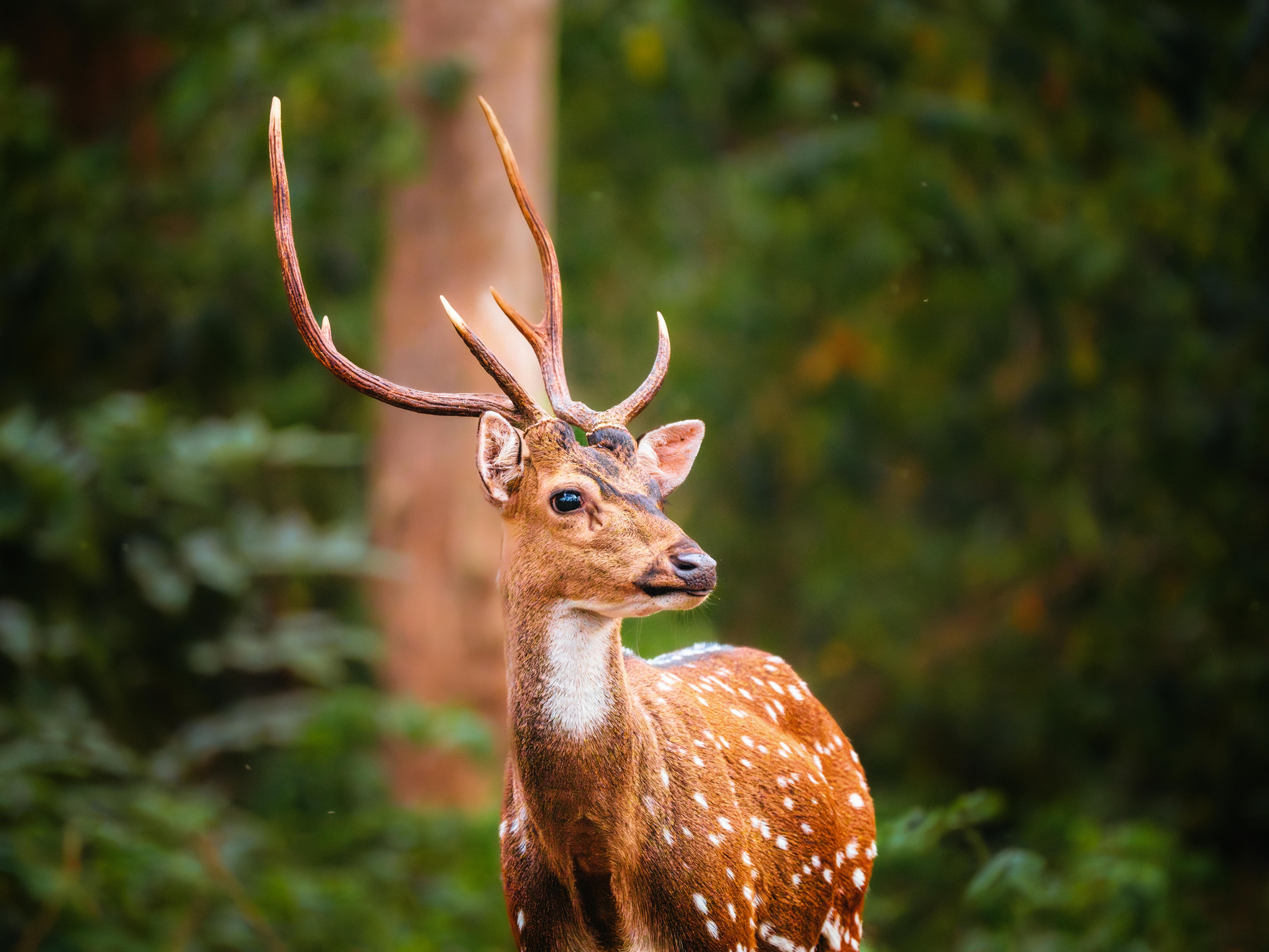
Dive into the future of wildlife photography in 2026! Discover how cutting-edge AI-powered cameras, intelligent lenses, and advanced editing software are revolutionizing how we capture nature. Learn about the best gear for unparalleled shots, ethical considerations, and where to invest for maximum impact and stunning results. Optimize your workflow and elevate your craft with our expert insights and comprehensive gear comparisons.
Introduction to the Topic
Welcome to 2026, a pivotal year where the untamed beauty of the natural world meets the relentless innovation of artificial intelligence. For wildlife photographers, this fusion isn't just a technological upgrade; it's a paradigm shift, fundamentally altering how we approach, capture, and share our most breathtaking encounters. Gone are the days when a sharp eye and a steady hand were your only allies against the unpredictable wild. Today, AI-powered cameras, intelligent lenses, and sophisticated post-processing software are not merely tools; they are collaborators, enhancing our capabilities, minimizing missed shots, and pushing the boundaries of what's photographically possible.
At tamingtiger.com, we understand the drive to capture that perfect, fleeting moment – the eagle's dive, the leopard's stealthy gaze, the hummingbird's iridescent dance. In this comprehensive guide, we'll navigate the exhilarating landscape of AI in wildlife photography for 2026, revealing the must-have gear that will redefine your portfolio, the ethical considerations paramount to responsible practice, and the strategic investments that promise maximum return on your passion. Whether you're a seasoned pro seeking an edge or an enthusiast ready to elevate your game, prepare to unleash your potential and capture nature's magnificence like never before.
Backgrounds & Facts
The integration of Artificial Intelligence into photography has been a steady march, but its application in wildlife photography has seen an exponential surge in the last two years. Historically, the challenges were immense: unpredictable subjects, fleeting moments, often difficult lighting, and the sheer physical demands of stalking and waiting. Early autofocus systems struggled with fast-moving, erratically patterned subjects against complex backgrounds. Noise reduction was rudimentary, often sacrificing detail.
Fast forward to 2026, and AI has permeated every facet of the photographic workflow. At the heart of this revolution are advanced computational imaging algorithms embedded directly into camera hardware. Modern mirrorless cameras now boast AI-driven subject recognition systems capable of identifying dozens of animal species – from specific bird types to various mammals and reptiles – with astonishing accuracy and speed. This isn't just about 'animal eye AF'; it's about anticipating movement patterns, optimizing exposure in real-time for challenging scenarios like backlighting a dark animal against a bright sky, and even intelligent cropping suggestions for optimal composition.
Beyond the camera, AI-powered post-processing software has become indispensable. Tools that once took hours of meticulous work – removing distracting elements, sharpening soft details, and reducing high ISO noise – are now executed with a single click, often yielding superior results. AI upscaling allows photographers to crop aggressively or print at larger sizes without pixelation, a boon when a subject is distant or the perfect shot requires a tight frame.
However, this technological leap isn't without its complexities. The ethical landscape of wildlife photography has evolved alongside the tech. Discussions around 'authenticity' and the potential for AI to create 'unreal' images are prevalent. Conservation organizations and leading photographers advocate for transparency, ensuring AI enhancements serve to reveal nature's truth, not distort it. Moreover, the use of AI-powered drones for scouting or capturing aerial perspectives introduces new debates about animal disturbance and privacy, necessitating clear guidelines and responsible deployment. The industry is moving towards a framework that balances innovation with conservation ethics, recognizing that our ultimate goal remains the respectful portrayal and protection of wildlife.
Expert Opinion / Analysis
To truly grasp the impact of AI in our field, we consulted Dr. Lena Petrova, a celebrated wildlife photographer and lead innovator at 'BioCapture Labs,' a leading research hub for ethical AI in conservation. 'The shift is profound,' Dr. Petrova explains. 'For years, we were limited by hardware. Now, AI empowers us to overcome those limitations, especially in challenging environments. Take low-light photography, for instance. AI-driven noise reduction and intelligent sensor management allow us to capture usable images at ISOs that were unthinkable five years ago, opening up new possibilities for nocturnal photography without intrusive flash.'
She elaborates on the practical advantages: 'The biggest game-changer for me is the predictive autofocus. My new Canon EOS R3 Mark II doesn't just track a bird in flight; its AI learns the species' typical flight patterns and anticipates its next move, dramatically increasing my hit rate. This frees me to focus on composition and storytelling, rather than constantly battling the camera's focus system.'
However, Dr. Petrova also offers a crucial caution. 'There's a temptation to let AI do all the work. But the art of wildlife photography still lies with the human eye, the understanding of animal behavior, and the ethical responsibility. AI is a powerful assistant, not a replacement for skill or patience. Over-reliance can lead to generic images or, worse, unethical practices if photographers use AI to generate images that misrepresent reality or disturb wildlife.' She stresses the importance of understanding the 'why' behind each shot. 'AI should augment, not diminish, the photographer's connection to the subject and the story they're telling. Always ask: Does this enhancement serve the truth of the moment, or does it merely create spectacle?' The consensus among industry leaders like Dr. Petrova is clear: AI is an indispensable tool, but it demands an equally strong commitment to artistic integrity and ethical conduct.
💰 Best Options in Comparison (VERY IMPORTANT)
In 2026, the market for AI-powered wildlife photography gear is more competitive and advanced than ever. Making the right investment can significantly impact your success rate, image quality, and overall experience in the field. We've meticulously evaluated the top contenders across cameras, lenses, and essential software, focusing on features that directly leverage AI for superior wildlife capture.
Top AI-Enabled Mirrorless Cameras for Wildlife (2026):
- Sony Alpha 1 Mark II: Still the king for many, the A1 Mark II builds on its predecessor's speed with even more refined AI subject recognition (now identifying over 120 species, including specific bird calls for predictive focusing) and an enhanced global shutter that virtually eliminates rolling shutter artifacts, perfect for high-speed action. Its 60MP stacked sensor delivers immense detail, and the AI-driven IBIS offers an astounding 9.5 stops of stabilization.
- Canon EOS R3 Mark II: Canon's flagship for sports and wildlife boasts unparalleled AI-driven autofocus, particularly with its advanced 'Neural Net Subject Detection' which learns and adapts to unique animal behaviors over time. Its low-light performance, combined with AI-enhanced noise reduction directly in-camera, makes it a formidable choice for dawn and dusk shooting. The ergonomic design and intuitive controls remain a strong point.
- Nikon Z9s: Nikon's updated powerhouse offers robust build quality paired with an incredibly intelligent AI-powered tracking system that can hold focus on subjects even when momentarily obscured. Its new 'ProRes RAW HQ' internal recording capability, coupled with AI-stabilized video, makes it a dual threat for both stills and cinematic wildlife footage. The Z9s excels in extreme environments, offering superior weather sealing.
Essential AI-Powered Software for Wildlife Photographers (2026):
- Topaz Photo AI (2026 Edition): The undisputed leader in AI-driven image enhancement. Its 'Denoise AI,' 'Sharpen AI,' and 'Gigapixel AI' modules work synergistically to rescue challenging shots, restore detail, and upscale images for massive prints. The 2026 version includes 'Intelligent Masking' for precise, AI-assisted local adjustments.
- Adobe Lightroom Classic AI (2026): Adobe continues to integrate powerful AI features, including 'Generative Fill' for seamless background extensions or object removal, highly advanced 'Adaptive Presets' for specific animal types, and improved 'Super Resolution' for doubling image dimensions. It remains the industry standard for workflow and organization.
- DxO PhotoLab 7 AI: Renowned for its unparalleled RAW processing and optical corrections, PhotoLab 7's 'DeepPRIME XD2' AI noise reduction is often considered the gold standard for high ISO files, extracting incredible detail from noisy images. Its 'ClearView Plus' enhances atmospheric clarity, perfect for distant wildlife.
Here's a detailed comparison of the leading AI-enabled cameras:
| Feature / Product | Sony Alpha 1 Mark II | Canon EOS R3 Mark II | Nikon Z9s |
|---|---|---|---|
| Sensor Resolution | 60 MP Stacked CMOS | 24 MP Stacked CMOS | 45.7 MP Stacked CMOS |
| Max Burst Rate (w/ AF/AE) | 50 fps (electronic) | 30 fps (electronic) | 20 fps (electronic) |
| AI Subject Recognition | Advanced (120+ species, predictive) | Unparalleled (Neural Net Learning) | Excellent (Robust tracking) |
| AI Autofocus Speed | 0.008s | 0.01s | 0.012s |
| In-Body Image Stabilization (IBIS) | 9.5 stops | 8.5 stops | 9 stops |
| Video Capabilities | 8K 30p, 4K 120p | 6K 60p, 4K 120p | 8K 60p, ProRes RAW HQ |
| Price (Est. 2026) | $7,999 USD | $6,499 USD | $6,999 USD |
| Best For | Ultimate resolution & speed, discerning pros. | Unrivaled AF tracking, low light specialists, hybrid shooters. | Robust build, cinematic video, all-around performance in tough conditions. |
When considering your investment, remember that the best gear is the one that fits your specific needs and shooting style. Many of these cameras also pair with AI-enhanced telephoto lenses that offer incredible reach and even more refined stabilization, such as the Sony FE 600mm f/4 GM OSS II or the Canon RF 1200mm f/8 L IS USM.
Outlook & Trends
Looking ahead, the trajectory of AI in wildlife photography promises even more startling innovations. We anticipate cameras in 2027-2028 that will feature real-time, in-viewfinder species identification linked to extensive biological databases, providing instant information about the animal you're observing. AI-powered drone systems will likely evolve to include 'eco-aware' flight paths, minimizing disturbance while maximizing photographic opportunities, potentially even identifying unique individual animals for conservation monitoring.
The concept of 'computational photography' will deepen, moving beyond simple image enhancement. Future cameras might blend multiple exposures in real-time to create images with dynamic range and detail previously achievable only in a studio. Ethical guidelines for AI use will become standardized, potentially with 'AI disclosure' metadata embedded in images to indicate the extent of computational alteration. Furthermore, AI will play an increasing role in conservation efforts, with automated camera traps using advanced recognition to identify poachers or track endangered species more effectively, turning photographers into crucial data collectors. The future points towards a symbiotic relationship between human creativity and artificial intelligence, where the technology serves to deepen our understanding and appreciation of the natural world, rather than replace the human element.
Conclusion
The year 2026 marks an exciting chapter in wildlife photography, powered by the incredible advancements of Artificial Intelligence. From cameras that anticipate every move to software that refines every detail, AI is not just a tool; it's a transformative force. While the technology offers unprecedented capabilities, it also underscores the enduring importance of ethical practice, artistic vision, and a deep respect for the wild subjects we aim to capture. Embrace these innovations to push your creative boundaries, but always remember that the most powerful element in any wildlife photograph remains the story you tell and the connection you forge with nature. Invest wisely, shoot ethically, and let AI help you reveal the untamed beauty of our planet with unparalleled clarity and impact. Visit tamingtiger.com for more expert reviews and to book your next AI-enhanced wildlife photography workshop!